How to Walk a Section of the South West Coast Path: Planning and Safety Tips
The South West Coast Path runs for around 630 miles between Minehead and Poole Harbour, and almost nobody walks it in one go. Most of us take it a stretch at a time: a weekend between two villages, a long day out from a holiday cottage, a week of back-to-back sections with a bag on your back. It rewards a bit of planning more than most trails. Get the transport, the tide and the bed for the night right, and the walking looks after itself.
Choose a section you can actually finish
Distances on the coast path lie. Three miles of Cornish cliff with two steep descents into wooded valleys can take longer than eight flat miles along an estuary. As a rough guide, allow about three kilometres an hour on easy ground and half that on a rugged cliff section with steps, stiles and mud. Then add time for the stops you will inevitably make.
Think about the shape of the day, too. A linear stretch between two points with a bus at each end is easier to manage than an out-and-back that commits you to the same climb twice. If you are new to the path, the gentler stretches around the Exe estuary or the rolling parts of Somerset make a kinder introduction than the relentless going around Hartland or the granite cliffs of west Cornwall.
Sort transport before you book anything
The one-car problem catches out more coast path walkers than any hill. You park at the finish, then realise there is no way back to the start. Do the journey in reverse before you commit to a route: find the last bus or train from your finish point, note the time, and check whether it runs on a Sunday or a bank holiday.
Some of the best walking days are built around the branch lines and coastal buses: the St Ives Bay Line, the Looe Valley Line, the Tarka Line, and the seasonal open-top services that link resorts along the coast. Cornwall and Devon are generous with buses in July and August and much thinner in October. A few coastal villages have no service at all, and rural taxis finish early, so book one in advance rather than hoping. Walker shuttles and baggage transfer firms operate in the busier stretches, but they need booking, often weeks ahead in summer.
Tides, estuaries and cut-off points
The path itself is mostly high ground, but your day will not be. Estuary crossings, beach sections and harbour ferries depend on the tide. The Camel between Padstow and Rock, the Torridge at Instow, and the Exe at Starcross are all crossed by ferry or by a low-water route, and ferries are frequently seasonal, weather-dependent and finished by late afternoon.
Tide times are not the same along the whole coast. High water at one end of a large estuary can be hours out from the other, so read a table for the nearest port rather than the one you happen to know. Harbour offices, chandlers and tourist information points still give them away. Wind and low pressure can push water higher up a beach than the table suggests, so build in a margin.
Plan the doubtful bit on a falling tide and leave yourself an escape route: a path up off the beach, a village with a bus, a shorter alternative. If a section has been diverted after a cliff fall, follow the diversion signs rather than the line on an old map.
Cliff paths, weather and the things that catch people out
Coast path walking is not hill walking with a sea view. The ground is often narrow, stepped, stony and slippery, and it can be busy in both directions. The two things that put people in trouble most often are simple: the edge and the weather.
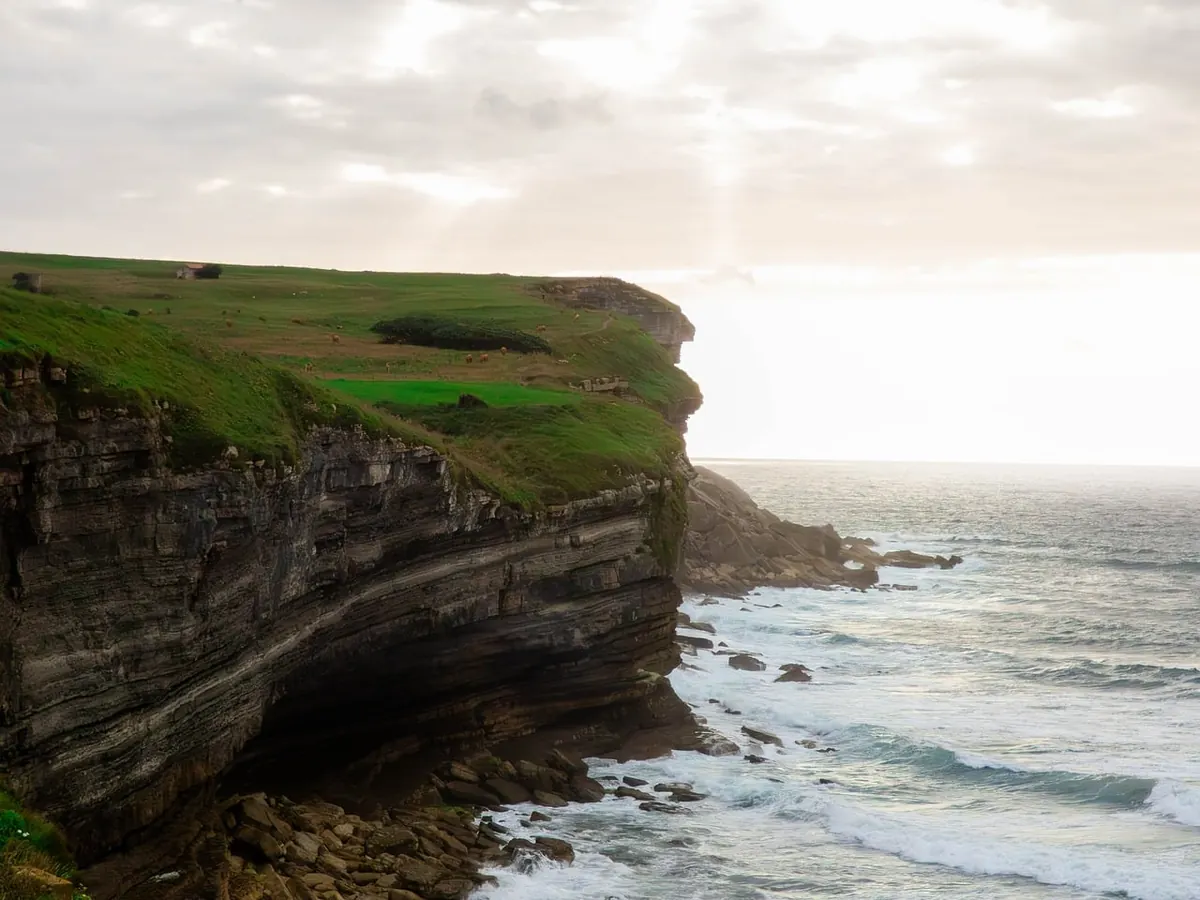
Cliff edges are unstable, particularly after heavy rain. Keep well back from the lip, do not stop on the outside of a corner to let someone pass, and never take a shortcut down to a beach that is not on the map. Keep dogs on a lead near livestock and near the edge. Weather at the coast changes faster than the forecast suggests: sea fog arrives from nowhere, headlands funnel the wind, and rain comes at you sideways. Take a waterproof even on a bright morning.
If something goes wrong, dial 999 and ask for the coastguard. A grid reference, or the what3words app, will help them find you quickly. Tell someone at home your route and your expected finish time, and message them when you are down.
What to carry
- A paper map of your section, plus an offline map on a charged phone in a waterproof case. Signal vanishes in coves and wooded valleys.
- At least a litre and a half of water for a full day, more in summer, and a plan for refills. Taps and shops can be hours apart.
- Lunch and snacks. Do not assume a pub will be open, or still serving food at three in the afternoon.
- A warm spare layer, a waterproof shell and a hat, even in July.
- Sun cream and sunglasses. The coast path is unusually exposed, and the breeze hides how strong the sun is.
- Head torch, small first-aid kit, blister plasters, whistle and power bank.
Accommodation, baggage and booking windows
Coast path villages are small and popular. Rooms in St Ives, Padstow or Boscastle for a summer weekend can be gone by spring, and bank holidays earlier still. Book the nights at each end of your walk before you book anything else.
Two practical tricks. First, base yourself in one place for two or three nights and walk sections out and back using the bus, rather than moving every morning. Second, look a mile or two inland: villages just off the coast are often quieter and cheaper, and a short taxi ride costs less than the difference in the room rate. Campsites, bunkhouses, hostels and pub rooms all fill up, and some pubs still take bookings only by phone. If you are using a baggage transfer, book it at the same time as your rooms. Kitchens stop serving early, so check before you arrive or carry something for supper.
The night before: a five-minute check
- Transport: what time is the last bus or train from your finish point?
- Tide: the time of high water at the nearest port, and any crossing on your route.
- Weather: a coastal forecast, the wind direction and the time of sunset.
- Someone: a person at home who knows your route and when to expect you.
Then pack, fill the bottle in the morning and set off. Walking the coast path a section at a time is how most people come to know it, and it is a fine way to spend a week of Saturdays.
Photo: g5fighter / Pixabay

Three Days on the West Highland Way: Trip Report and Packing Tips
A three-day fastpack of the West Highland Way, with notes on where the pace fell apart and which kit...

A Winter Ascent of Snowdon: Trip Report and Lessons Learnt
A cold, clear winter day on Yr Wyddfa via the Llanberis Path, with the kit that earned its place and the...
About Us