UK Day Hike Kit Checklist: What to Pack for Changeable Weather
British weather rarely commits to anything. You can leave a car park under blue sky, eat lunch behind a wall to escape the wind, and walk the last mile with rain running off your hood. None of that has to ruin a day out, provided your rucksack was packed for three seasons rather than one. The trick isn't carrying more — it's carrying the right things, in a bag you can still lift onto your shoulders without a run-up.
What follows is a working checklist for a UK day hike: the clothing, navigation, food and safety kit that genuinely earns its place. Print it, tick it off the night before, and adapt it to the season, the terrain and how far you're going.
Layers Do the Heavy Lifting
Forget a single warm jacket. Build your clothing in three layers and you can adjust as the day changes — which, in the hills, it will do several times before lunch.
Next to your skin, wear a synthetic or merino base layer that moves sweat away. Cotton is a poor choice for walking: once it's wet it stays wet, and a damp T-shirt in a cold wind chills you quickly. Over that, a fleece or light insulated mid layer for when you stop or the cloud drops. On top, a waterproof shell with taped seams and a hood that stays put in wind. A windproof layer is a useful extra in summer, when rain is unlikely but a summit breeze still bites.
Clothing essentials
- Base layer — synthetic or merino, plus a spare in the bag even in July
- Mid layer — fleece or thin synthetic jacket
- Waterproof shell — jacket and, if rain is forecast, overtrousers
- Walking trousers — quick-drying, not jeans
- Hat and gloves — light ones in summer, warmer ones from autumn onwards
- Sunglasses and sunscreen — UV is not related to temperature
Feet, Socks and the Blister Economy
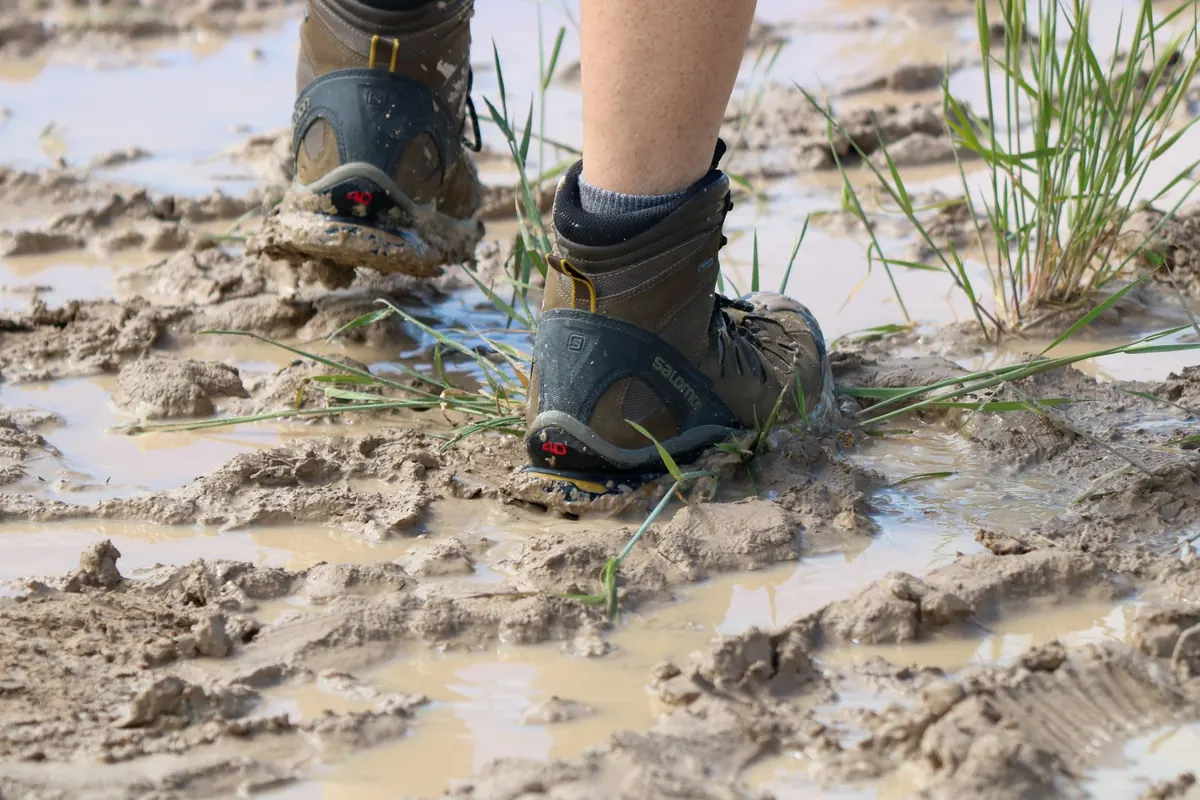
Most ruined walks start at the feet. Choose footwear that suits the ground: supportive boots for rough, rocky or boggy terrain, lighter trail shoes for well-made paths and dry summer days. Whatever you wear, break it in before a long day out.
Socks matter as much as boots. Cotton socks hold moisture and rub; merino or synthetic walking socks cushion and dry faster. Pack a spare pair — changing socks at lunch can rescue a day when your feet are damp. Add blister plasters, a small roll of tape, and consider gaiters if you're heading somewhere heathery, muddy or wet underfoot. Walking poles are optional, but they take real load off your knees on long descents.
Navigation You Can Still Trust When the Battery Dies
A phone is a useful navigation tool, not a reliable one. Cold drains batteries, screens crack, and signal vanishes exactly where you'd most like it. Carry a paper map of the area — an Ordnance Survey or Harvey sheet at a suitable scale — in a waterproof case, and a compass you know how to use with it. If you're rusty, spend twenty minutes practising taking a bearing before you go, not on the hillside in mist.
Keep your phone charged and warm, carry a small power bank, and download offline maps before you leave the house. Tell someone where you're going, your route and your expected return time — and message them when you're back. If you do need help, dial 999 and ask for the police, then mountain rescue; the exact wording varies slightly depending on where in the UK you are.
Food, Water and Something Warm
Plan for more than you think you need. A gentle half-day walk can turn into a long one with a wrong turn or a slow companion. Roughly a litre to a litre and a half of water is a sensible starting point for a half day, more in heat or on exposed ground, and refill points in the hills are not guaranteed.
Eat before you're hungry. Mix slow-release food — oatcakes, sandwiches, nuts — with something quick and sugary for a steep pull. Add an emergency ration that stays in the bag for the day you're out longer than planned. A flask of tea or coffee is one of the great small luxuries of a cold-weather walk, and a small stove is worth the weight if you like a proper brew stop.
Pack for the walk you might end up doing, not just the one you planned.
Safety and Emergency Kit
This is the section you hope never to open, which is exactly why it should be in the bag every time. A head torch with spare batteries, a whistle, a foil blanket or emergency shelter, and a small first aid kit covering cuts, blisters and pain relief. Add a tick tool in spring and summer — ticks are common in long grass and bracken, and prompt removal matters. If you have a medical condition, or you're packing for someone who does, take advice from your GP or pharmacist about what belongs in your kit.
A few metres of tape, a couple of zip ties and a spare lace weigh almost nothing and have fixed many a broken buckle. Insect repellent in summer, a small towel, and a dry bag or two to keep spare layers and electronics dry complete the picture.
The Printable Checklist
Tick these off before you leave. Adjust for season, distance and terrain.
- Clothing: base layer, mid layer, waterproof shell, overtrousers, walking trousers, hat, gloves, spare warm layer
- Footwear: broken-in boots or trail shoes, walking socks, spare socks, gaiters, blister kit
- Navigation: paper map, compass, waterproof map case, charged phone, power bank, offline maps downloaded
- Food and water: water bottles or bladder, lunch, snacks, emergency ration, flask
- Safety: head torch, spare batteries, whistle, foil blanket or shelter, first aid kit, tick tool
- Extras: sunscreen, insect repellent, sunglasses, small repair kit, dry bags, cash for parking
Packing It and Heading Out
Pack heavier items — water, food, stove — in the middle of the rucksack, close to your back, with soft layers around them. Keep the things you'll want without stopping, like a hat, snack and map, in the top pocket or hip belt. Line the bag with a dry bag or bin liner if the forecast is uncertain.
Check the forecast the morning you go, then treat it as a hint rather than a promise. If the weather closes in, the group is struggling, or your turnaround time arrives, turning back is a good decision, not a failed one. The kit above won't make you invincible, but it will keep you warm, found and fed — and that's what turns a changeable day out into a good one.
Photo: Ajale / Pixabay
Three Days on the West Highland Way: Trip Report and Packing Tips
A three-day fastpack of the West Highland Way, with notes on where the pace fell apart and which kit...
A Winter Ascent of Snowdon: Trip Report and Lessons Learnt
A cold, clear winter day on Yr Wyddfa via the Llanberis Path, with the kit that earned its place and the...
About Us